Friday, October 28, 2011

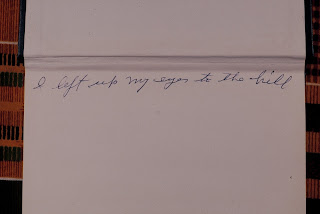
"'I lift My Eyes to the Hill': The Life of Mabel Hampton" (1902-October 26, 1989) Part 6--the 1940s, Continued

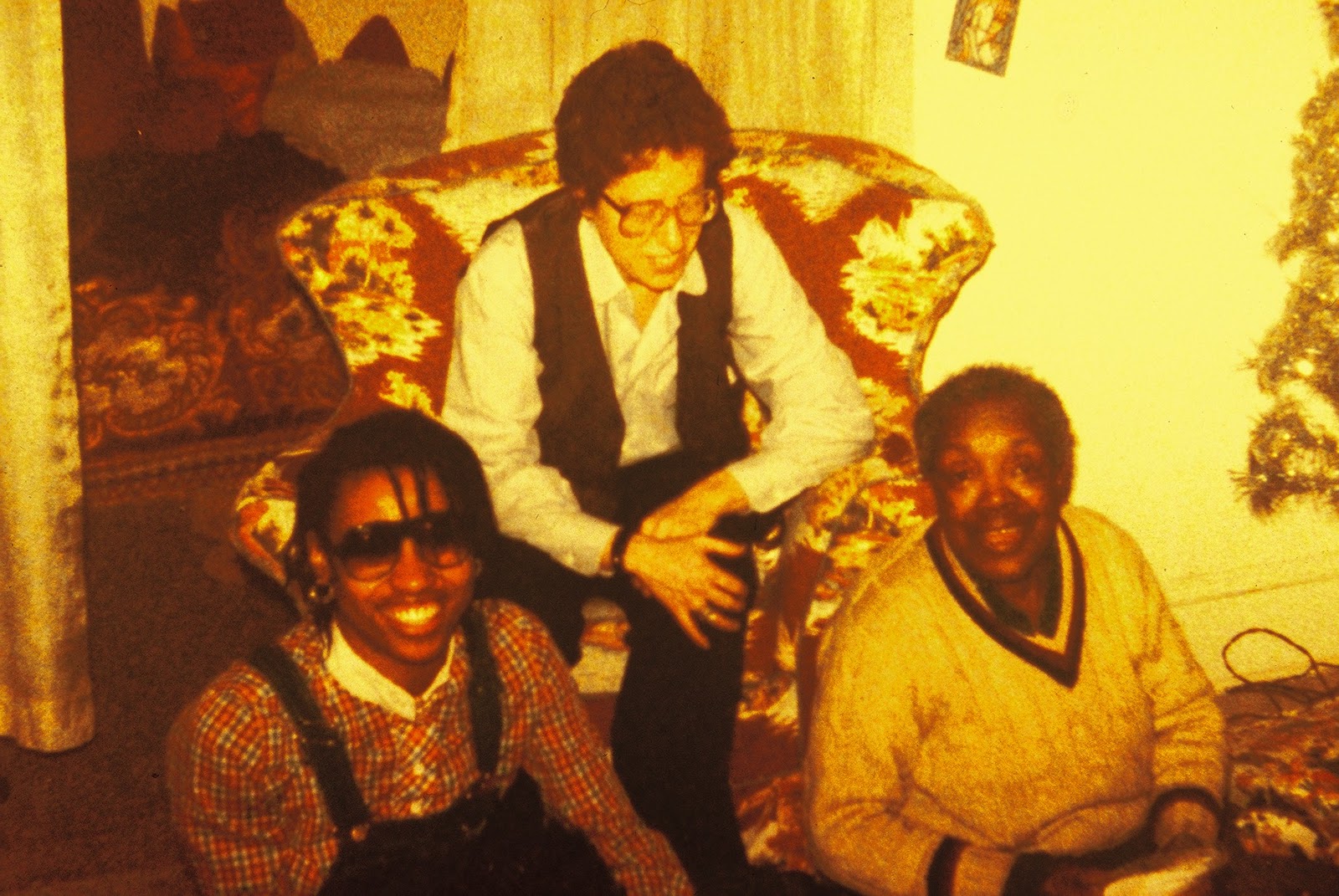
Arisa Reed and Mabel Hampton, Ms. Hampton's Bronx home, 1970s


On March 29, 1944 Ms. Hampton attends the National Negro Opera Company's performance of La Traviata. This group believed in opera for the masses and included in its program a congratulatory message from the Upper West Side Communist Party. On its board sat Eleanor Roosevelt and Mary McCloud Bethune, both part of another moment in lesbian history. In 1952, this same company will present Ouanga, an opera based on the life of of the first king of Haiti, Dessaline, who the program says "successfully conquered Napoleon's armies in 1802 and won the black Republic's fight for freedom." Ms. Hampton will be in the audience.

Continuing her dedication to finding the roses amid the struggle, on November 12, 1944, Ms. Hampton will hear Marion Anderson sing at Carnegie Hall and add the program of this event to her collection of newspaper articles about the career of this valiant and supremely talented performer.

Ms. Hampton's never-ending pursuit of work often caused long absences from home, and Ms. Foster was often left waiting for her partner to return to their Bronx apartment on 169th Street, the apartment they had moved into in 1945, at the war's end, and which would remain their shared home until Ms. Foster's death in 1978.

Dear Mabel,
Received your letter and was very glad to hear from you and to know that you are well and happy. This leaves me feeling better than I have since you left. Everything is OK at home. Only I miss you so much, I will be glad when this time is up. There is nobody like you to me. I am writing this on my lunch hour. It is 11PM, I am quitting tomorrow. I don't see anyone as I haven't been feeling too well. Well, the 1/2 hour is up. Nite nite be good and will see you soon.
                                                                    Little Bear


Ms. Foster telling Ms Hampton of her fall, needing her home

In 1948, Ms. Hampton falls ill and cannot work. She applies for home relief and is awarded a grant of $54.95 a month, which the agency stipulates should be spent the following way: $27 for food; $21 for rent; 55cents for cooking fuel; 80cents for electricity; $6 for clothing and for personal incidentals, she is allotted $1. From these meager funds she still manages to give comfort to friends.

Postcard, August 9, 1948:
Dear Miss Lillian and Mabel:
The flowers you sent were beautiful and I liked them very much. I wear the heart you sent all the time. It was very nice to hear from you. I am feeling fine now. I hope you are both in the best of health.
                                                                   Love, Doris

In 1949, Ms. Hampton writes to the Home Relief Agency telling the caseworker to stop all payments because she has the promise of a job.

The decade that began in a war between nations and peoples ends in Ms. Hampton's version of history with a carefully preserved article about the international figure, Josephine Baker.

Cut out of the March 12, 1949 issue of the The Pittsburgh Courier are the following words:
Well friends, fellow Negros and countrymen, you can stop all that guesswork and surmising about Josephine Baker. This writer knew Edith Spencer, Lottie Gee, Florence Mills, knew them well. He has also known most of the other colored women artists of the last thirty years. His word to you is that this Josephine Baker eminently belongs. She is not a common music hall entertainer. She has been over here for a long time, maybe 25 years. The little old colored gal from back home is a French lady now.

Josephine Baker performing in Nigeria, c.1950s
That means something. It means for a colored person that you have been accepted into a new and glamorous and free world where color does not count. It means that in the joy of the new living you just might forget that 'old oaken bucket' so full of bitter quaffs for you. It means that once you have found some solid footing in the new land of freedom, you might tax  your mind to blot out all the sorry past, all the old associations, to become an alien in spirit as well as in fact. It please me folks to be able to report to you that none of this has possessed Josephine. I tested her and she rang true. What she does is for you and me. She said so out of her own mouth. Her eyes glistened as she expostulated and described in vivid, charged phrases the aim and purpose of her work. She was proud when I told her of Lena and and of Hilda [Simms]. 'You girls are blazing trails for the races,' I commented. 'Indeed so,' she quickly retorted. After she had talked at length of what it means to be a Negro and of her hope that whatever she did might reflect credit on Negros, particularly the Negros of her land of birth, I chanced a leading question. 'So you're a race woman,' I queried. I was not sure she would understand. But she did. 'Of course I am,' she replied. Yes, all the world's a stage and Josephine comes out upon it for you and me."

In my own work, I have tried to focus on the complex interaction between oppression and resistance, aware of the dangers of romanticizing losses while at the same time aggrandizing small victories, but I am still awed by how a single human spirit refuses the messages of self-hatred and out of bits and pieces weaves a garment grand enough for the soul's and the body's passions. Ms. Hampton prized her memories of Josephine Baker, Marian Anderson and Paul Robeson, creating for herself a nurturing family of defiant African American women and men. Her lesbian self was part of what was fed by their soaring voices. When The New York Times closed its obituary on Ms. Hampton with the words, "There are no know survivors," it showed its ignorance of how an oppressed people make legacies out of memory and out of those collected moments, bring a collective history into being.

Thursday, October 27, 2011

"'I Lift My Eyes to the Hill': The Life of Mabel Hampton" 1902-October 1989: Part 5--the 1940s

A 1940s Wall Plaque from the Bronx Home of Mabel and Lillian


Ms. Hampton's War Effort


The 1940s were turbulent years, marked by World War II and unrest at home. While African-American soldiers were fighting the armies of racial supremacists in Europe, their families were fighting the armies of racial dictates of Jim Crow society at home. Harlem, Detroit, and other American cities would see streets become battle fields.

For African-American working women like Ms. Hampton, the 1940s was the decade of the slave markets, the daily gathering of Black women on the street corners of Brooklyn and the Bronx to sell their domestic services to white women who drove by looking for cheap labour.  In 1940, Ms. Hampton was part of this labor force as she had been for over twenty years, working year after year without worker's compensation, health benefits or pension payments.

In September of 1940, she receives a postcard canceling her employment with one family: "Dear Mabel, please do not come on Thursday. I will see you again on Friday at Mrs. Garfinkels. I have engaged a part time worker as I need more frequent help as you know. Come over to see us."


Ms. Hampton, however, did not let her working difficulties dampen her enthusiasm for her cultural heroes, however. On October 6, 1940, she and Lillian are in the audience at Carnegie Hall when at 8:30, Paul Robeson commands the stage. The announcement for this concert is the first document we have reflecting Ms. Hampton's lifelong love of the opera and her dedication to African-American cultural figures and institutions such as Marian Anderson and Josephine Baker.


In 1941, perhaps in recognition of her perilous situation as day worker, Ms. Hampton secures the job of matron with the Hammarlund Manufactoring Company on West 34th Street, assuring her entrance into the new social security system begun just six years earlier by Franklin Roosevelt,

She still takes irregular night and day domestic employment so she and Ms. Foster can, among other things, on May 28, 1946, purchase from the American Mending Machine Company one Singer Electric Sewing machine with console table fort he price of $100. She leaves a $44 deposit and carefully preserves all records of the transaction.


On February 20, 1942, we have the first evidence of Ms. Hampton's involvement in the country's war efforts: a ditto sheet of instructions from the American Women's Voluntary Services addressed to all air raid wardens. "During the German attack on the countries of Europe, the telephone was often used for sabotage thereby causing panic and loss of life by erroneous orders. We in New York are particularly vulnerable to in this respect since our great apartment houses have often hundreds even thousands under one roof...The apartment house telephone warden must keep lines clear in time of emergency. Type of person required: this sort of work should be particularly suited for women whose common sense and reliability could be depended upon." Ms Hampton was such a person.

In August. Ms. Hampton is working hard for the Harlem Branch of the New York Defense Recreation Committee, trying to collect cigarettes and other refreshments for the soldiers and sailors who frequent Harlem's USO. In December of 1942, she is appointed deputy sector commander in the air warden service by Mayor La Guardia. This same year she will also receive her American Theater Wing Service membership card. Throughout t1943, she serves as her community's air raid warden and attends monthly meetings of the 12th Division of the American Women's Voluntary Services Organizations on West 116th Street. During all this time, her country will maintain a segregated army abroad and a segregated society at home.

In January and February of 1944, she receives her fourth and fifth war loan citation. This support for causes she believed in, no matter how small her income, continues throughout Ms. Hampton's life. In addition to her religious causes, for example, she will send monthly donations to SCLC and the Martin Luther King Memorial Fund; by the end of the seventies, she is adding gay organizations to her list.


"'I Lift My Eyes to the Hill': The Life of Mabel Hampton" 1902-October 1989: Part 4--the 1930s

Ms. Hampton welcoming visitors, LHA in #13A, c. 1980s


The 1920s end with Mabel Hampton living fully 'in the life," trying to piece together another kind of living from her day work and from her chorus line jobs. Later, when asked why she left show business, she will say, "Because I like to eat."

House rent parties and home businesses help Ms Hampton and Ms Foster survive the 1930s

 
The Depression does not play a large role in Ms. Hampton's memories, perhaps because she was already earning such a marginal income. We know that from 1925 until 1937, she did day work for the family of Charles Baubrick. Ms. Hampton carefully saved all letters from her employers testifying to her character.

December 12, 1937: "To Whom It May Concern: This is to certify that the bearer Mabel Hampton has worked for me for the last 12 years doing housework off and on and she does the same as yet. We have always found her honest and industrious."


Reading these letters, embedded as they were in all the other documents of Ms. Hampton's life, is always sobering. So much of her preserved materials testify to an autonomous home and social life, but these formal letters sprinkled through each decade remind us that in some sense Ms. Hampton's life was under surveillance by the white families who controlled her economic survival.


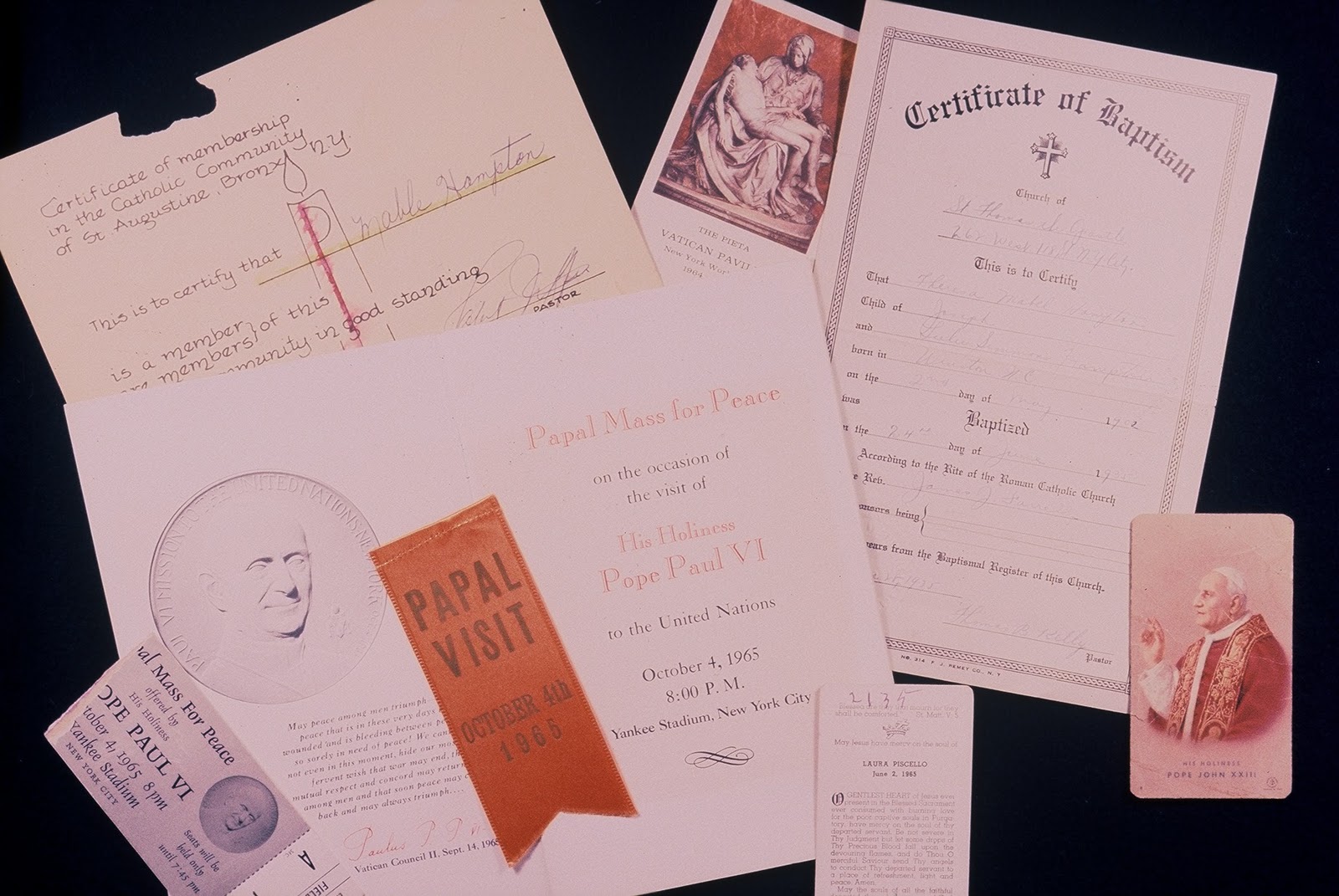
In 1935, Ms. Hampton is baptized into the Roman Catholic church at St. Thomas the Apostle on West 118th Street, another step in her quest for spiritual comfort. this journey would include a lifelong devotion to the mysteries of the Rosicrucian and a full collection of Marie Corelli, a Victorian novelist with a spiritualist bent. Ms. Hampton will end the decade registering with the United States Department of Labor trying to find a job. She is told, "We will get in touch with you as soon as there is a suitable opening."

Ms. Lillian Foster, c. 1932


The event that changes Ms. Hampton's life forever happens early on in the decade, in 1932. While waiting for a bus, she meets a woman even smaller then herself, "dressed like a duchess,"  as Ms. Hampton would later say. Her name was Lillian Foster and the two would remain together for the rest of Lillian's life. Ms. Foster remembers in 1976, two years before her death: "Forty-four years ago I met Mabel. We was a wonderful pair. I'll never forget it. But she's a little tough. I met her in 1932, September twenty-second. And we haven't been separated since in our whole life. Death will separate us. Other than that I don't want it to end."

Ms. Hampton, to the consternation of her more discrete friends, dressed in an obvious way much of her life. Her appearance, however, did not seem to bother her wife. Ms. Foster goes on to say;"A lady walked in once, Joe's wife, and she says, 'You is a pretty neat girl. you have a beautiful little home but where is your husband?' And just at that time, Mabel comes in the door with her key and I said, 'There is my husband.' Joe's wife said 'Now you know if that was your husband, you wouldn't have said it!' to which Ms. Foster firmly replied, "But I said it!"

Mabel and Lillian, c. 1940s


Lillian Foster, born in 1906 in Norfolk, Virginia, shared much of the same Southern background Ms Hampton did, except she came from a large family. She was keenly aware that Ms. Hampton was "all alone" as she often put it. Ms. Foster worked her whole life as a presser in white-owned dry-cleaning establishments, a job, like domestic service, that had its roots in the neo-slavery working conditions of the urban South at the turn of the century. These many years of labor in poorly ventilated back rooms filled with chemical fumes accelerated Ms. Foster's rapid decline in her later years, but together with a group of friends, these two women would create a household that lasted for forty-six years, some of which were vary hard ones indeed.


This household with friends took many shapes. When crisis struck and a fire destroyed their apartment in 1976, as part of the real estate wars that were gutting and leveling the Bronx, Ms. Foster and Ms. Hampton came to live with me and Deborah Edel in our home, the home also of the Lesbian Herstory Archives, until they could move back into their own apartment. Later, Ms. Hampton would describe our shared time as an adventure in lesbian families. "Down here it was just like two couples, Joan and Deborah and Mabel and Lillian; we got along lovely, and we played, we sang, we ate; it was marvelous! I will never forget it. And Lillian, of course, Lillian was my wife. I had Joan laughing because I called Lillian, 'Little Bear,' but when I first met her in 1932, she was to me, she was a duchess--the grand duchess. Later in life, I got angry with her one day and I called her the 'little bear' and she called me 'the big bear' and of course that hung on to me all through life. And now we are known to all our friends as the 'big bear' and the 'little bear.'


Lillian and Mabel at #13A


In the Mabel Hampton--Lillian Foster collection at LHA, you will find dozens of cards signed "Big Bear," but when Ms. Hampton appealed to government officials or agencies for much needed help, as she often did as their housing conditions deteriorated, she spoke of Ms. Foster as her sister.

Letter to NYC Mayor Lindsay, 1969:
Dear Mr. Mayor, I don't know if I am on the right road or not, but I am taking a chance; now what I want to know is can you tell me how I can get an apartment, I have been everywhere and no success. I am living at the above address [639 E. 169th Street, Bronx] for 26 years but for about the past ten years the building has gone down terribly. For two years we have no heat all winter, also no hot water. We called the housing authority but it seems it don't help; everywhere I go the rent is so high that poor people can't pay it and I would like to find a place before the winter comes in with rent that I can afford to pay. It is two of us (women) past 65. I still work but my older sister is on retirement so we do need two bedrooms. If you can do something to help us it will be greatly appreciated.
                                                                   Thanking you in advance,
                                                                    I remain, Miss Mabel Hampton
There was no response from the Mayor's office.

Finding this letter marked a turning point in my work. Ms. Hampton's request for a safe and warm home for herself and her wife now stands at the starting point of all my historical inquiry: How did you survive?

In a document of a different sort, the program for a social event sponsored by Jacobi Hospital, where she was employed for the last twenty years of her working life, we discover that a Ms. Mabel Hampton and Ms. Lillian Hampton are sitting at Table 25. These two women negotiated the public world as "sisters," which allowed expressions of public affection and demanded a recognition of their intimacy.


Documents of pleasures

There is a seamless quality to Ms. Hampton's life that does not fit our usual paradigm for doing lesbian history work. Her life does not seem to be organized around what we have come to see as the usual rites of gay passage, like coming out or going to the bars. Instead, she gives us the vision of an integrated life in which the major shaping events are the daily acts of work, friends, and social-political organizations and the major definers of these territories are class and race. In addition, she expects all aspects of her life to be respected.

Every letter preserved by Ms Hampton written by a friend, co-worker, or employer contains a greeting or a blessing for Ms. Foster. "I do hope to be able to visit you and Lillian some evening for a real chat and a supper by a superb cook! Do take care of yourself and my best to Lillian," from Dolores, 1944; "God bless and keep you and Lillian well always, I wish I could see you both some times," Jennie, 1977.


"'I Lift My Eyes to the Hill': The Life of Mabel Hampton" (1902-Ocotber 26, 1989) Part 3: "The 1920s" Continued

Ms. Hampton at #13, c. 1970s

But before all this exploration takes place, Ms. Hampton will be arrested for prostitution by two white policemen and be sentenced to three years in Bedford Hills Reformatory for Women by a Judge Norris. Ms. Hampton: "While we're standing there talking, the door opens. Now I know I had shut it. and the two white men walk in--great big white men. 'We're raiding this house,' one of them says. 'For what?'

'Prostitution,' he says. I hadn't been with a man no time. I couldn't figure it out. I didn't have time to get clothes or nothing. The judge she sat up there and says, 'Well, only thing I can say is Bedford.' No lawyer, no nothing. She railroaded me.

When Ms Hampton talks about her prison experiences, she dwells on the kindnesses she found there: "It was summertime and we went back out there and sat down. She [another prisoner] says, 'I like you.'
'I like you too.' She said no more until time to go to bed. We went to bed and she took me in her bed and held me in her arms and I went to sleep. She put her arms around me like Ellen used to do, you know, and I went to sleep.


Ms.Katherine Davis, 1920

But where Ms. Hampton found friendship, the  Board of Managers of the prison found scandal and disgrace. Opened in 1902 in a progressive era of prison reform, Bedford Hills under its first woman administrator, Katherine Davis, accepted the special friendships of its women inmates, but in 1920, word that interracial lesbian sex was occurring throughout the prison caused Ms, Davis to lose her job. The new administrators demanded segregated facilities, the only way according to one of the men, to prevent interracial sex.

By the time I was doing this oral history with Ms. Hampton, she had left this experience far behind. She told me that she seldom told anyone about it; she would just say she had gone away for awhile. But toward the end of her life, Ms. Hampton wanted her whole story to be told. She realized that her desire to be open about her life was not always popular with her peers. "So many of my friends got religion now," she would say, "you can't get anything out of them."

While Mabel Hampton so generously shared her prison experience with me, I read about Bedford Hills in Estelle Friedman's book, "Their sister's Keepers: Women's Prison Reform in America, 1830-1930. When I read the following sentence in Freedman's book, "By 1919, we are told, about 75% of the prisoners were prostitutes, 70% had venereal disease, a majority were of low mental ability and ten percent were psychopaths," I was forced to see the lesbians encoded in this list. Mabel Hampton was among those counted women. As gays, as lesbians, we have a special insight [or should], a special charge in doing history work. We, too, have had our humanity hidden in such lists of undesirables. I started this work on Ms. Hampton because her life brought to the study of history the dignity of the human face behind the sweeping summaries. And because I loved her.

After 13 months, Ms. Hampton is released from the Reformatory with the condition that she stay away from New York City and its bad influences, but Ms, Hampton cannot contain herself. A white woman with a gray car whom she met in Bedford comes to Jersey City to take her to parties in New York. When a neighbor informs on her, she is forced to return and complete her sentence at Bedford. Ms. Hampton later describes some of the life that the state had declared criminal.

"In 1923, I am about twenty years old. I had rooms at 120 West 122nd Street. A girlfriend of mine was living next door and they got me three rooms there on the ground floor--a bedroom, a living room and big kitchen. I stayed there until I met Lillian in 1932. I went away with the people I worked for, but I always kept my rooms to come back to. Then I went into the show.

"Next door these girls were all lesbians, they had four rooms in the basement and they gave parties all the time. We'd buy all the food--chicken and potato salads. I'd chip in with them because I could bring my girlfriends. We also went to 'rent parties' where you go in and pay a couple of dollars. you buy your drinks and meet other women and dance and have fun, but with our house, we just had close friends. Sometimes there would be twelve or fourteen people there. We'd have pig feet, chittlins. In the wintertime, it was black-eyed peas and all that stuff. Most of the women wore suits. Very seldom did any of them have slacks or anything like that because they had to come through the streets. Of course, if they were in a car, they wore the slacks. Most of them had short hair. And most of them was good-lookin' women too. The bulldykers would come and bring their women with them. And you wasn't supposed to jive with them, you know. They danced up a breeze. They did the Charleston, they did a little bit of every thing. They were all colored women. Sometimes we ran into someone who had a white woman with them. but me, I'd venture out with any of them. I just had a ball."
A Friend of Ms Hampton c, 1930s


Mabel Hampton, c. 1930s


Mary Jane Taylor, Ms. Hampton's "running buddy", c. 1930s


Ann, one of the girls, c. 1930s


"The Captive"
News article of the arrest of Helen Menken on obscenity charges for starring in the play "The Captive," NYC, 1927


"I had a couple of white girlfriends down in the village. We got along fine. At that time I was acting in the Cherry Lane Theater. I didn't have to go to the bars because I would go to women's house. Like Jackie (Moms) Mabley would have a big party and all the girls from the show would go. She had all the women there."

In addition to private parties, Ms. Hampton and her friends were up on the latest public lesbian events. Sometime in February of 1927, Ms. Hampton attended the new play that was scandalizing Broadway, The Captive.  Whatever her material struggle was in any given decade, Ms. Hampton sought out the cultural images she needed. Here is how she remembered that night in the theater.

"Well, I heard about it and a girlfriend of mine had taken me to see this playThe Captive, and I fell in love--not only with the The Captive but the lady who was the head actress in it. Her name was Helen Mencken. So I decided I would go back--I had heard so much talk about it. I went back to see it by myself. I sat on the edge of my seat! I looked at the first part and I will always think that woman was a lesbian. She played the part too perfect! She had the thing down! She kissed too perfect, she had everything down pat. So that's why I kept going back to see it because it looked like to me it was part of my life. I was a young woman, but I said now this is what I would like to be, but of course, I would have to marry and I didn't want to marry [the play focuses on the seduction of a married woman by the offstage lesbian, who is also married], so I would just go on and do whatever I thought was right to do. I talked to a couple of my friends in Jersey City about the play. I carried them back, paid their way to see it, and they fell in love with it. There was plenty of women in that audience and plenty of men too! [here Ms. Hampton means same-sex couples] They applauded and applauded. This same girl with he green car, she knew her--Helen Mencken--and she carried me backstage and introduced me. Boy, I felt so proud! And she says, 'Why do you like the show?' I said, Because it seems a part of my life and what I am and what I hope to be.' she says, 'That's nice. Stick to it! You'll be alright.'"

Helen Mencken in The Captive, 1927


"I Lift My Eyes to the Hill': The Life of Mabel Hampton" Part 2

Mabel Hampton and Paula Grant, in #13A, old home of LHA, NYC, 1981.Paula wrote on October 30, 2011: "Mabel used to sometimes call me 'The Vest'. [Arisa Reed was 'Yellow Pants."]  I also remembered carrying her out of the church on her body's final journey and how the funeral director had told his employees to step back because "the women will take her." Every time I use the Whitestone Bridge, I say 'hello." I have JEB"S photo that used to be in #13A hanging i my house and every time I use the Whitestone Bridge, I say 'hello' from all of us."


"I'm Mabel Hampton. I was born on May the second 1902, in Winston-Salem, North Carolina, and I left there when I was eight years old. Grandma said I was so small that my head was as big as a silver dollar. She said that she did all she could to make me grow. One day she was making the bed and gettin' things together after she fed the chickens. She never let me lay in bed; I lay in the rocking chair, and this day she put the clothes in the chair; when she carried 'em outside, she forgot I was in 'em and shook the clothes out and shook me out in the garden out on the ground. And Grandma was so upset that she hurt me.

My grandmother took care of me. My mother died two months after I was born. She was poisoned, which left me with just my grandma, mother's youngest sister, and myself. We had a house and lived on a street--we had chickens, had hogs, garden vegetables, grapes and things. We had a backyard, I can see it right now, that backyard. It had red roses, white roses, roses that went upside the house. We never had to go to the store for anything. On Saturdays we go out hunting blackberries, strawberries and peaches. My girlfriends lived on each side of the street: Anna Lou Thomas, Hattie Harris, Lucille Crump. Oh-OOH-O Anna Lou Thomas, she was a good lookin', she was a good lookin' girl.

One day Grandma says, 'Mabel, I'm goin' to take you away.' She left Sister there and we went to Lynchburg, Virginia, because Grandma's mother had died. I remember when I got there, the man picked me up off the floor and I looked down on this woman who had drifts of gray hair. She was kind of a brown-skinned woman and she was good lookin'. Beautiful gray hair she had. I looked at her and then he put me down on a stool and I set there. They sang and prayed and carried on. I went to sleep.'"

Ms. Hampton, c. 1918

However pleasant Ms. Hampton's memories were of North Carolina, she had no intention of returning there later in life. "Lillian tried her best to get me to go to Winston-Salem.I says, 'No, I don't want to.' She says, 'You wouldn't even go to my home?' I says, 'No, because with my nasty temper they'd lynch me in five minutes. Because they would see me walkin' down the street holdin' hands with some woman, they want to put me in jail. Now I can hold hands with some woman all over New York, all over the Bronx and everywhere else and no one says nothing to me.'"


Ms. Hampton, at LHA, 1982

When she was seven years old, in 1909, Ms. Hampton was forced to migrate to New York. In her own telling there is a momentous sense that she had lost whatever safety she had in that garden of roses.

"One morning I was in the bedroom getting ready for school [a deep sigh]. I heard Grandma go out in the yard and come back and then I heard a big bump on the floor. So I ran to the door and I looked and Grandma was laying stretched out on the floor. I hollered and hollered and they all came running and picked her up and put her on the bed. She had had a stroke. My mama's younger aunt, I'll never forget it, was combing my hair and I looked over at Grandma layin' in bed. It was in the morning. The sun was up and everything. She looked at me and I looked at her. And when my aunt got finished combing my hair, Grandma had gone away.

"They called my mother's sister in New York and she came so fast I think she was there the next day. I remember the day we left Winston-Salem. It was the summertime. We went by train and I had a sandwich of liver between two pieces of bread. And I knew and felt then that things was going to be different. After eating that sandwich I cried all the way to New York. My aunt tried to pacify me but it didn't do no good, seems as if my heart was broken.


Ms. Hampton's dear ones including her wife of forty years, Lillian Foster, c. 1979

Taken to a small apartment at 52 West Eight Street, Ms. Hampton meets her uncle, a minister, who, within the year, will rape her.

In telling her story, Ms. Hampton has given two reasons for her running away at age 8 from this home: one involves a fight with a white girl a school and the other, a terrible beating by her uncle after she had misspelled a word. Whatever the exact reason, it was clear that Ms. Hampton had already decided she needed another air to breathe.

"My aunt went out one day and he raped me. I said to myself, 'I've got to leave here.' He wouldn't let me sleep in the bed. They had a place where they put coal at, and he put a blanket down and made me lay there. so this day, I got tired of that. I went out with nothing on but a dress, a jumper dress, and I walked and walked."

Here begins an amazing tale of an eight-year-old girl's odyssey to find a place and a way to live. After walking the streets for hours, the young Ms. Hampton "comes to a thing in the ground, in the sidewalk, people was going down there." A woman comes by and thinks she recognizes the lost child. "Aren't you Miss Brown's little girl?" Before Ms. Hampton can answer, she places a nickel in her hand and tells her to back home to Harlem. As Ms. Hampton says, "that nickel was a turning point in my life."

Instead of going uptown, Ms. Hampton boarded a Jersey-bound train and rode to the last stop. She came above ground and walked until she found a playground. "I seen all these children playin', white and black, all of them havin' a good time." She joins the children and plays until it begins to get dark. Two of the children take an interest in her and she makes up a story: "My aunt told me to stay here until she comes." The girl calls to her brother, "You go get the cops, I'll try to find her aunt." She brings a woman back with her--a Miss Bessie White--who begins to ask her questions. Ms. Hampton: "I looked down the street and from the distance I see the boy comin' with a cop so I decided to go with the woman. Bessie said, "Come, I'll take you home."


Ms. Hampton will remain with the White family until she is seventeen years old. One member of the family, Ellen, particularly, stays in her memory: "I seen a young woman sitting left of where I come in at. I say to myself, this is a good-lookin' woman: I was always admiring some woman. Oh, and she was. She had beautiful hair and she  looked just like an angel. She got up out of the chair, she was kind of tall, and she says, 'you come with me.' So she took me upstairs, bathed me, and said, 'we'll find you some clothes.' she always talked very softly. and she says, 'you'll sleep with me.' I was glad of that.

"So I went and stayed with them, The other sister went on about lookin' for my aunt. I knew she never find her. See, I knew everything about me, but I kept quiet. I kept quiet for twenty years."

Mabel Hampton, from the very beginning of her narrative, speaks with a determination of a woman who must take care of herself. She will decide what silences to keep and what stories to tell, creating for herself a power over life's circumstances that her material resources seldom gave her.


Ms. Hampton with Ellen White, c. 1912

For Mabel Hampton, the 1920s were both a decade of freedom and one of literal imprisonment. In 1919, when she is seventeen years old, she is doing housework for a Dr. Kraus of Jersey City. Her beloved Ellen, sthe first woman friend to hold Ms. Hampton in her arms, has died during childbirth. With Ellen gone, Ms. Hampton's ties to the White family are loosening. She will find work dancing in an all-woman's company that performs in Coney Island and have her first requited lesbian love affair.


One of Ms. Hampton's Coney Island memories, c. 1920


She will discover the club life of New York. This is the decade in which Ms. Hampton will pay a visit to the salon of A'Leila Walker, the flapper daughter of Madam Walker, and be amazed at the multiple sexual couplings she observes.


A'Leila Walker, 1926


She will perform in the Layfayette Theater and dance at the Garden of Joy, both in Harlem. In this decade, she will make the acquaintance of Ethel Waters, Gladys Bentley and Alberta Hunter. She will be one of the 150,000 mourners who sing "My Buddy" as the casket bearing Florence Mills, beloved singer, slowly moved through the Harlem streets in 1927. This is Ms. Hampton's experience of the period that lives in history books as the Harlem Renaissance.
Gladys Bentley, c. 1922


Layfayette Theater, 1920s, NYC


Program for performance by Florence Mills, NYC, 1921

In Memory on October 26: '"I Lift My Eyes to the Hill': The Life of Mabel Hampton" (1902-October 26, 1989) Part 1


Ms. Hampton's writing, 1980s


opening slide for Kessler Lecture, 1992, NYC


On Thursday nights, Mabel Hampton held court at the Lesbian Herstory Archives, opening the mail and gossiping with other archive workers. A devout collector of books on African-American history and lesbian culture, in 1976 Ms. Hampton had donated her lesbian paperback collection to the archives. Surrounded by these books and many others, she shared in welcoming the visitors, some of whom had come just to meet her.
At her desk in the Bronx, 1970s
 
Another more public place we could count on finding Ms. Hampton in her later years was New York's Gay Pride march. From the early 1980s on, Ms. Hampton could be seen strutting down Fifth Avenue, our avenue for the day, marching under the Lesbian Herstory Archives banner, wearing her jauntily tilted black beret, her dark glasses, and a bright red t-shirt proclaiming her membership in SAGE (Senior Action in a Gay Environment). Later in the decade, when she could no longer walk the whole way, a crowd of younger lesbian women fought for the privilege to push her wheelchair down the avenue.

Marching in the early 1980s in NYC, Gay Pride March
 
Mabel Hampton, domestic worker, hospital matron, entertainer, had walked down many roads in her life--not always to cheering fans. Her persistent journey to full selfhood in a racist and capitalistic America is a story we are still learning to tell.

  In recent years, I have been dazzled at our heady discussion of deconstruction, at our increasingly sophisticated academic conferences of gender representation, at the publication of sweeping communal and historical studies, and at our brave biographies of revered figures in American history in which the authors speak clearly about their subject's sexual identity. Mabel Hampton's is the story we are in danger of forgetting in our rush of language and queer theory.
 
Telling Mabel Hampton's history forces me to confront racism in my own relationship to her. Our two lives, Ms. Hampton's and mine, first intersected at a sadly traditional and suspect crossroads in the history of the relationships between black and white women in this country. These relationships are set in the mentality of a country that in the words of Professor Linda Meyers "could continue for over three hundred years to kidnap an estimated 50 million youths and young adults from Africa, transport them across the Atlantic with about half dying, unable to withstand the inhumanity of the passage."

 In 1952, my short white Jewish mother took her breakfasts in a Bayside, Queens, luncheonette. sitting next to her was a short black Christian woman. For several weeks, they breakfasted together before they each went off to work, my mother to the office where she worked as a bookkeeper, Ms. Hampton to the homes she cleaned and the children she cared for.

  One morning, Ms. Hampton told me, she followed my mother out to her bus to say good-bye and my mother, Regina, threw the keys to our apartment out the bus window, asking whether Ms. Hampton would consider working for her. "I told her I would give her a week's trial," Ms. Hampton said.


 This working relationship was not to last long because of my mother's own financial instability, but the friendship between my mother and Ms. Hampton did. I remember Ms. Hampton caring for me when I was ill. I remember her tan raincoat with a lesbian paperback in its pocket, its jacket bent back so no one could see the two women in the shadows on its cover. I remember, when I was twelve years old, asking my mother as we did the laundry together one weekend whose men's underwear we were washing since no man lived in our apartment," They are Mabel's," she said.
Mabel Hampton, c. 1940s

In future years, Regina, Mabel and Mabel's wife, Lillian, became close friends, bound together by a struggle to survive and my mother's lesbian daughter. Much later, Ms. Hampton told me during one of her afternoons together that when Regina suspected I was a lesbian, she called her late one night and threatened to kill herself if I turned out that way. "I told her, she might as well go ahead and do it because it wasn't her business what her grown daughter did and besides I'm one and it suits me fine."

Joan and Mabel, early 1980s

 Because Ms. Hampton and I later formed an adult relationship based on our commitment to a lesbian community, I had a chance much later in life to reverse, when Ms. Hampton herself needed care,  the image this society thrives on, that of black women caring for white people. The incredulous responses we both received  in my Upper West Side apartment building when I was Ms. Hampton's caretaker  in the 1980s showed how deeply the traditional racial script still resonated. To honor her, to touch her again, to be honest in the face of race, to refuse the blankness of physical death, to share the story of her own narrative of liberation--for all these reasons--it is she I must speak about tonight.
Deborah Edel, Arisa Reed and Mabel Hampton, c.1980


 Ms.Hampton pointed the way her story should be told. Her legacy of documents so carefully assembled for Deborah Edel who had met Ms. Hampton in the early seventies and who had all of Ms. Hampton's trust, tell in no uncertain terms that her life revolved around two major themes--her material struggle to survive and her cultural struggle for beauty. Bread and roses, the worker's old anthem--this is what I want to remember, to share with you, the texture of the individual life of a working woman.
  
After her death on October 26, 1989, when Deborah and I were gathering her papers, we found a box carefully marked, "In case I pass away see that Joan and Deb get this at once, Mabel." On top of the pile of birth certificates and cemetery plot contracts was a piece of lined paper with the following typed entries:
1915-1919: 8B, Public School 32, Jersey City
1919-1923: Housework, Dr Kraus, Jersey City
1923-1927:Housework, Mrs. Parker, Jersey City
1927-1931: Housework, Mrs. Katim, Brooklyn
1932-1933: Housework, Dr. Garland, New York City
1934-1940: Daily Housework, different homes
1941-1944: Matron, Hammurland Manufactoring Co., NYC
1945- 1953: Housework, Mrs. Jean Nate
1948-1955: Attendant, New York Hospital
1954-1955:General, Daily Work
Lived 1935: 271 West 122nd Street
Lived 1939-1945: West 111th Street
Lived 1945-current (1955): 663 East 169th Street, Bronx, NYC

Ms. Hampton, 1930s

Compiled in the mid-fifties when Ms. Hampton was applying for a position at Jacobi Hospital, the list demanded attention--a list so bare and yet so eloquent of a life of work and home.

Since 1973, the start of the Lesbian Herstory Archives, I have felt Ms. Hampton's story must be told, but I am not a trained historian or sociologist. However, in the seventies, training workshops in doing oral histories with gay people were popping up around the city, and I attended every session I could. There, Jonathan Katz, Liz Kennedy, Madeline Davis and I would talk for hours, trying to come up with the questions that we thought would elicit the kind of history we wanted: What did you call yourself in the twenties? How did you and your friends dress in the forties? What bars did you go to? In the late seventies, when I started doing oral history tapes with Ms. Hampton, I quickly learned how limited our methods were.

"Joan: Do you remember anything about sports? Did you know women who liked to play softball? Were there any teams?
Mabel: No, all the women, they didn't care too much about them-- softballs--they liked the soft women. Didn't care about any old softballs. Cut it out!"
Mary Jane Taylor, friend, c. 1930

I soon realized that Ms. Hampton had her own narrative style, which was tightly connected to how she made sense of her life, but it wasn't until I had gone through every piece of paper she had bequeathed us that I had a deeper understanding of what her lesbian life had meant.

 Lesbian and gay scholars argue over whether we can call a woman a lesbian who lived in a time when that word was not used. We have been every careful about analyzing  how our social sexual representation was created by medical terminology and cultural terrors. But here was a different story. Ms. Hampton's lesbian history is embedded in the history of race and class in this country; she makes us extend our historical perspective until she is at its center. The focus then is not lesbian history but lesbians in history.


When asked "Ms. Hampton, when did you come out?" she loved to flaunt, "What do you mean? I was never in!" Her audiences always cheered this assertion of lesbian identity, but now I think Ms. Hampton was speaking of something more inclusive.
 
Driven to fend for herself as an orphan, as a black working woman, as a lesbian, Ms. Hampton always struggled to fully occupy her life, refusing to be cut off from the communal, national, and world events around her. She was never in, in any aspect of her life, if being "in" means withholding the fullest response possible from what life is demanding of you at the the moment.


Along her way, Ms. Hampton found and created communities for comfort and support, communities that engendered her fierce loyalty. Her street in the Bronx, 169th Street, was her street, and she walked it as "Miss Mabel," known to all and knowing all, whether it was the woman representing her congressional district or the numbers runner down the block. How she occupied this street, this moment in urban twentieth-century American history, is very similar to how she occupied her life--self-contained but always visible, carrying her own sense of how life should be lived but generous to those who were struggling to make a decent life out of indecent conditions.


Mabel Hampton, 1922

I cannot re-create the whole of Ms. Hampton's life, but I can follow her journey up to the 1950s by blending the documents she left, such as letters, newspaper clippings and programs with excerpts from her oral history and my interpretations and readings of other sources. These personal documents represent the heart of the Lesbian Herstory Archives; they are the fragile records of a tough woman who never took her eyes off the hilltop,  who never let the tyranny of class keep her from finding the beauty she needed to live, who never accepted her traditional woman's destiny, and who never let hatred and fear of lesbians keep her from her gay community.

Work Night at LHA, #13A, c. 1980


None of it was easy. From the beginning, Ms. Hampton had to run for her life.


Desperate to be considered for employment by the City of New York, Ms. Hampton began to document her own beginnings in April of 1963:

To the county clerk in the Hall of Records, Winston-Salem, North Carolina: Gentlemen: I would appreciate very much your helping me to secure my birth papers or any record you may have on file, as to my birth and proof of age as this information is vital for the purpose of my securing a civil service position in New York. Listed below are the information I have to help you locate any records you may have. 

Winston-Salem, 1920s
I was born approximately May 2, 1902 in Winston-Salem. My mother's name was Lulu Hampton or Simmons. I attended Teacher's College which is its name now at the age of six. My grandmother's name was Simmons. I lived there with her after the death of my mother when I was two months old. It is very important to me as it means a livelihood for me to secure any information."


On an affidavit of birth dated May 2, 1943, we find this additional information: Ms. Hampton was of the Negro race, her fahter's full name was Joseph Hampton (a fact she did not discover until she was almost twenty years old), and he had been born in Reidsville, North Carolina. Her mother's birthplace was listed as Lynchburg, Virginia.

This appeal for a record of her beginnings points us to where Ms. Hampton's history began: not in the streets of Greenwich Village where she will sing for pennies thrown from windows in 1910 at the age of eight, not even in Winston-Salem, where she will live on her grandmother's small farm from her birth until 1909, but further back into the past of a people, further back into the shame of a country.

Ms. Hampton's deepest history lies in the Middle Passage of the Triangular Slave Trade, and before that in the complex world of sixteenth- century Africa. When Europe turned its ambitious face to the curving coastline of the ancient continent and created an economic systems based on the servitude of Africans, Ms. Hampton's story began. The Middle Passage, the horrendous crossing of the waters from Africa to this side of the world, literally and figuratively became the time of generational loss. Millions died in those waters, carrying their histories with them. This tragic "riddle in the waters" as the Afro-Cuban poet Nicolas Guillen calls it, was continued on the land of the southern plantation system. Frederick Douglass writes in 1845, "I have no accurate knowledge of my age, never having seen any authentic record containing it." These words were written in 1845 and Ms. Hampton was born in 1902, but now as I reflect on Ms. Hampton's dedication to preserving her own documents, I read them as a moment in the history of an African-American lesbian.


Ms. Hampton, c. 1925

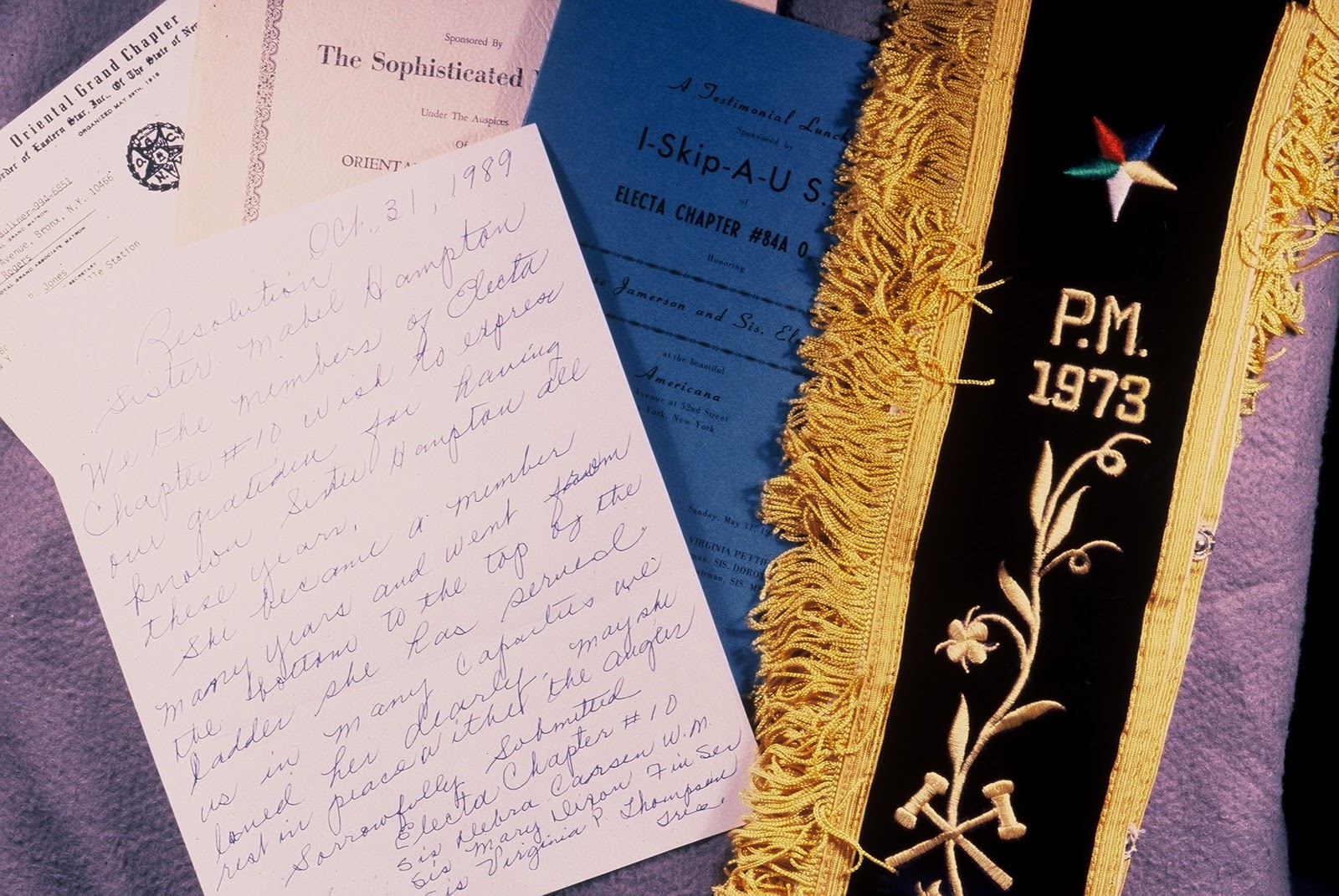
The two themes of work and communal survival that run so strongly throughout Ms. Hampton's life are prefigured by the history of black working women in the sharecropping system, a history told in great moving detail by Jacqueline Jones in her study, Labor of Love, Labor of Sorrow: Black Women, Work and Family from Slavery to the Present.Though Ms. Jones never mentions lesbian women, Ms. Hampton and her wife of forty-five years, Lilian Foster, who was born in Norfolk, Virginia, carried on in their lesbian lives traditions that had their roots in the post-slavery support systems created by southern black women at the turn of the century. The comradeship of  these all-women benevolent and mutual aid societies was rediscovered by Ms. Hampton and Ms. Foster in their New York Chapters of the Eastern Star.

Ms. Hampton dressed for Eastern Star function, NYC, 1970s


Even the work both women did, domestic service for Ms. Hampton and pressing for Ms. Foster, had its roots in this earlier period. Jones tells us that "in the largest southern cities from 50 to 70 percent of all black women were gainfully employed at least part of the year around the turn of the century." In Durham, North Carolina, close to Ms. Hampton's birthplace, during the period of 1880-1910, "one hundred percent of all black female household heads, aged 20 to 24, were wage earners." Very likely, both Ms. Hampton's grandmother and her mother were part of this workforce.


(Note: I am trying to capture on this new format the text and images I presented as my talk for the first David Kessler Award for Lifetime Achievement in NYC in 1992. Please be patient as I work out the technological challenges. I only wish I could share the music tape that Paula Grant created to accompany Ms. Hampton's life journey. All is done to honor this woman, who touched so many with her strength of spirit, her love of life, her generosities and social visions.)